

The Monthly Cookie Scan: Why You Must Re-Scan Your Site Every 30 Days
February 01, 2026
•

3 min read
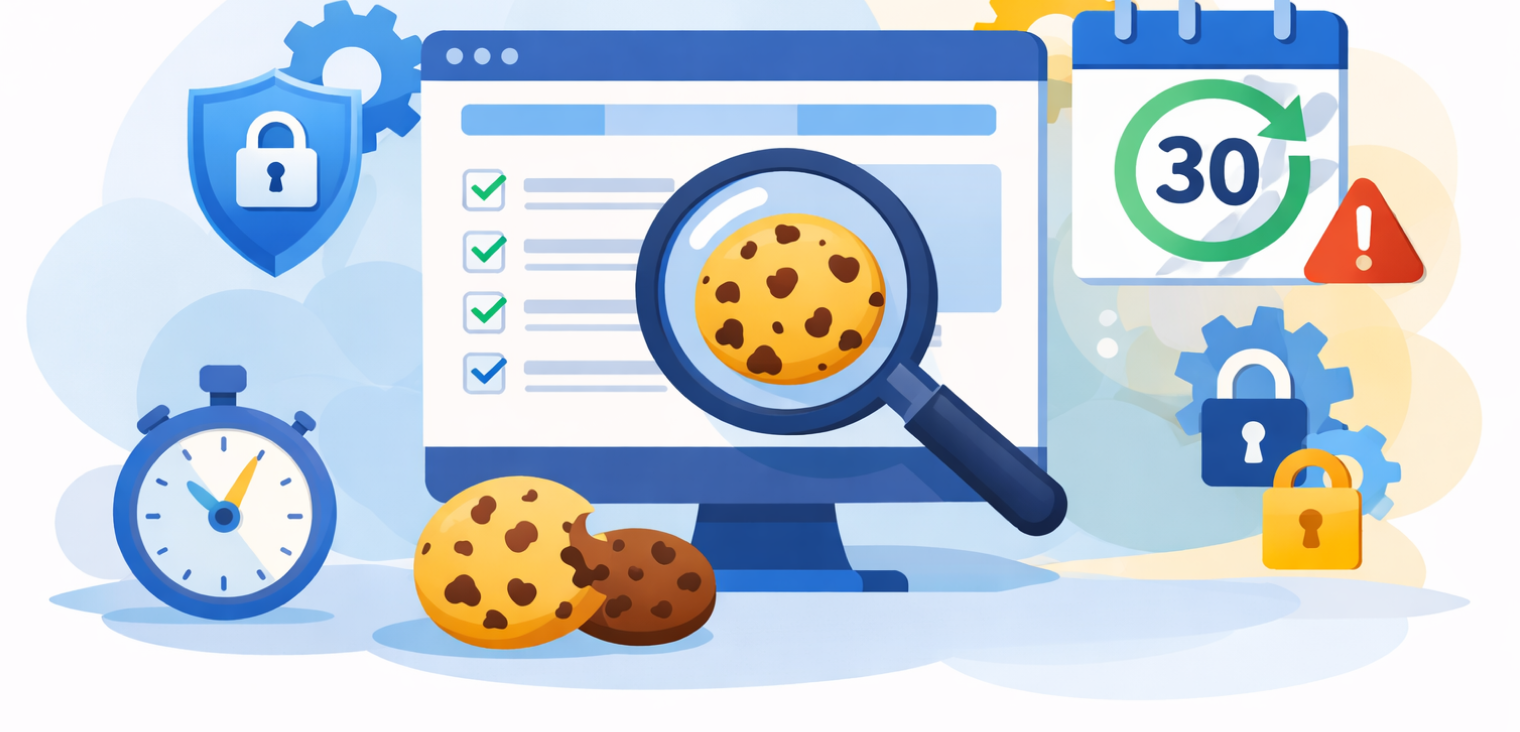
Table of contents
back
to the top
The Monthly Cookie Scan: Why You Must Re-Scan Your Website Every 30 Days
Your Website Is Never “Finished”
Websites aren’t static assets—they’re living systems that change constantly. Every time you update a plugin, launch a new marketing campaign, adjust tracking settings, or test a new feature, you risk introducing new tracking technologies without realizing it. These can include cookies, pixels, scripts, or local storage items added quietly in the background.
The Compliance Risk
If your Consent Management Platform (CMP) isn’t aware of these new trackers, it can’t block them before a user gives consent. This results in pre-consent firing, one of the most common GDPR violations—and one of the easiest for regulators to detect.
The Solution
A recurring monthly cookie scan closes this compliance gap. It’s not just a technical safeguard—it’s a critical administrative control that helps demonstrate Accountability during audits or investigations.
1. The Legal Imperative: Why Transparency Depends on Scanning
Regular cookie scanning isn’t optional. It’s directly tied to two core GDPR principles that regulators consistently enforce.
Requirement 1: Informed Consent (Article 7)
Consent must be fully informed. This means users must know exactly what data is being collected and who is collecting it. If your website adds a new Facebook Pixel or marketing cookie that isn’t disclosed in your cookie policy, any consent you previously obtained is automatically invalid for that tracker.
Requirement 2: Accountability (Article 5)
GDPR doesn’t just require compliance—it requires proof of compliance. A documented monthly scan log shows regulators that you actively monitor your website, identify changes, and update disclosures in a timely manner.
Analogy:
Think of a monthly cookie scan like testing a fire alarm system. You don’t expect a fire—but you still test regularly to ensure every sensor works and no new risks go undetected.
2. Why 30 Days Matters: Where New Cookies Come From
The 30-day interval isn’t arbitrary. Changes happen frequently, and leaving an unblocked tracker live for weeks or months dramatically increases legal exposure.
Plugin and Platform Updates
CMS platforms like WordPress and Shopify regularly push updates. These updates can quietly introduce new third-party scripts for analytics, licensing, or performance tracking—often without explicit notice.
Marketing and A/B Testing Tools
Marketing teams frequently deploy new tags through tools like Google Tag Manager. Whether it’s a short-term survey, heatmapping tool, or a new ad platform tag, each script needs proper categorization and consent controls immediately.
Third-Party Vendor Changes
Even if you don’t change anything yourself, your vendors might. Ad networks and analytics providers can modify cookie names, purposes, or data processors. A monthly scan ensures your CMP stays aligned with these upstream changes.
3. The Real Risks of Skipping Regular Scans
What seems like a minor administrative task can quickly escalate into a major compliance issue.
Risk 1: Regulatory Fines
Data protection authorities like France’s CNIL actively scan websites for cookies that load before consent. If they find an unblocked cookie from a plugin update made weeks ago, that’s a clear violation.
Risk 2: Loss of User Trust
Privacy-aware users and advocacy groups often inspect cookie behavior. Discovering undisclosed trackers can trigger complaints, public scrutiny, and long-term reputational damage.
Risk 3: Broken or Unreliable Data
Uncategorized cookies can distort analytics and reporting. When trackers fire inconsistently or without proper labeling, your data becomes fragmented and unreliable—undermining business decisions.
4. Best Practice: Automate the Process
Manually auditing your website for new cookies is time-consuming and error-prone. Automation is essential.
Scheduled, Site-Wide Scanning
Your CMP should run a full scan every 30 days across all pages—not just the homepage.
Immediate Flagging and Blocking
New cookies should be automatically flagged so you can quickly categorize them and apply appropriate consent rules before they collect data.
Automatic Policy Updates
Scan results should feed directly into your public-facing Cookie Policy, ensuring disclosures remain accurate and consent stays valid without manual rewriting.
Final Takeaway
A monthly cookie scan isn’t just good practice—it’s a foundational requirement for GDPR compliance. By scanning regularly, you reduce legal risk, protect user trust, and ensure your consent mechanisms actually work as intended.
Sources
The requirements for this blog are based on the following primary legal documents and regulatory guidance:
- GDPR (General Data Protection Regulation) - Articles 5 and 7: https://gdpr-info.eu/
- ICO (UK Information Commissioner's Office) - PECR Guidance:https://ico.org.uk/for-organisations/direct-marketing-and-privacy-and-electronic-communications/guide-to-pecr/cookies-and-similar-technologies/
- CNIL (French Data Protection Authority): https://www.cnil.fr/en
Explore further
What Happens to Your Ad Campaigns When Consent Mode Is Set Up Wrong
See how an incorrect Google Consent Mode setup can underreport conversions, shrink remarketing audiences, and send campaign optimisation in the wrong direction.
July 30, 2026
8 min
Cookie Consent for Mobile Web vs Desktop: Should the Banner Be Different?
Learn how to design a responsive cookie consent banner for mobile and desktop visitors.
July 23, 2026
8 min

Zero-Party Data vs First-Party Data: What Marketers Need to Know About Consent
Learn the practical difference between zero-party and first-party data, and why both still require clear purposes, transparency, and valid consent.
July 16, 2026
8 min