
Do Users Understand Your Consent Text? Best Practices for Clarity
December 10, 2025
•

3 min read
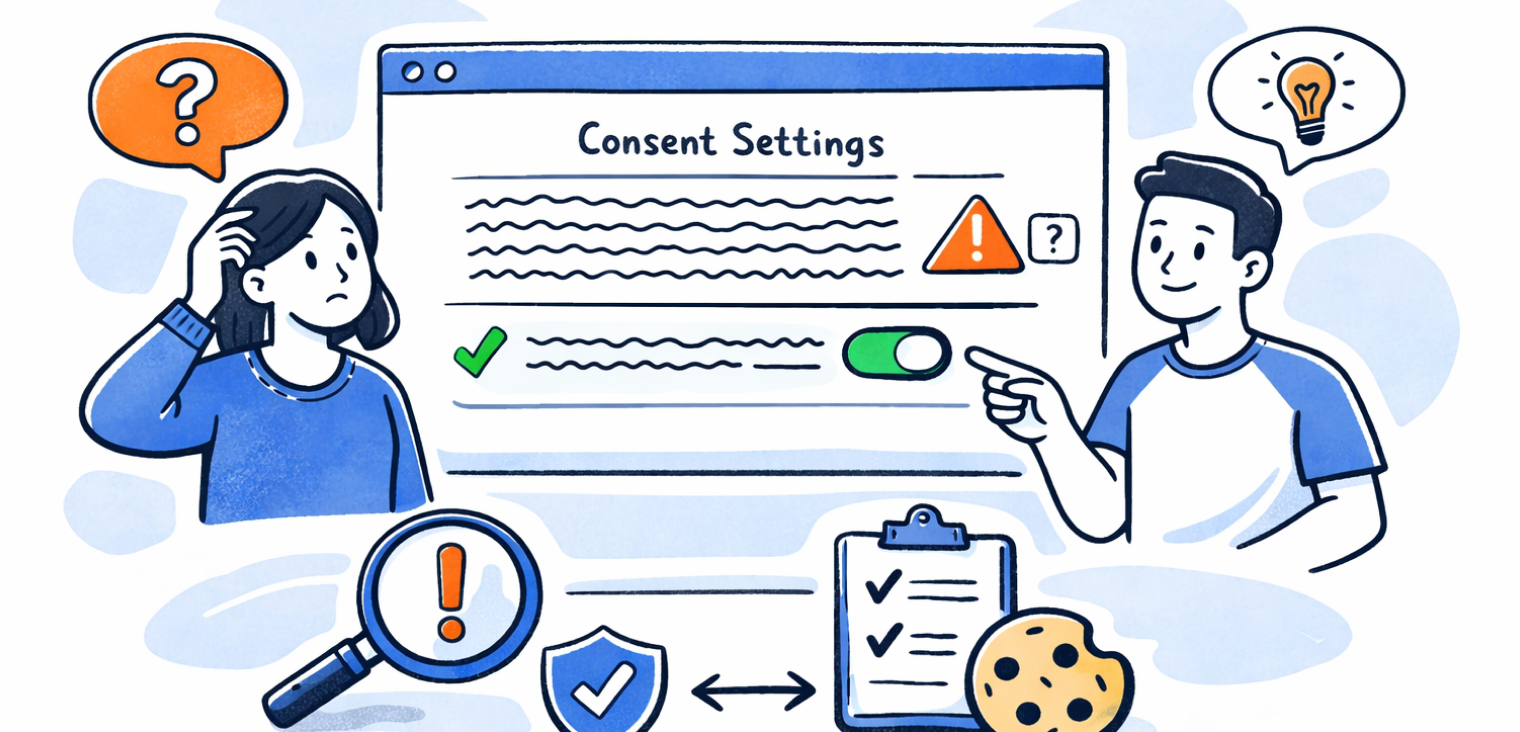
Table of contents
back
to the top
Do Users Understand Your Consent Text? Best Practices for Clarity
Under the GDPR, informed consent isn't just about offering a choice, it's about making that choice understandable.
Yet many websites still serve cookie banners and privacy notices filled with legal jargon, vague options, or misleading wording. The result? Confused users, low opt-in rates, and potential non-compliance.
This blog explores why clarity matters in consent language and how to write consent text that's both user-friendly and legally valid.
Why Consent Text Readability Matters
According to GDPR Article 7(2), consent requests must be presented "in an intelligible and easily accessible form, using clear and plain language." That's not a suggestion, it's a legal requirement.
Poorly written cookie text can lead to:
-
Users unintentionally accepting tracking
-
High opt-out or bounce rates
-
Legal invalidation of consent in audits
-
Damaged brand trust
Consent is not valid if users don't understand what they're agreeing to.
What Makes Consent Language Confusing?
Some CMPs or in-house banners still use:
-
Legalese: "By continuing, you consent to the processing of data in
accordance with our privacy policy."
-
Vague terms: "We may use cookies for analytics purposes."
-
Passive phrasing: "Your data may be shared."
-
No context: "Marketing cookies enabled by default."
These create ambiguity and ambiguity means risk.
Best Practices for Clear Consent Language
Here's how to improve readability and user understanding:
1. Use Plain Language
-
Instead of: *"We utilize third-party tracking technologies..."
-
Say: *"We use cookies to understand how you use our site."
Plain language improves comprehension across reading levels and languages.
2. Be Specific About Purpose
Tell users what their data is used for.
-
"We use cookies to measure how many people visit our website."
-
"We use marketing cookies to show you more relevant ads."
Avoid blanket statements like "for performance purposes."
3. Avoid Coercive or Loaded Wording
Don't pressure the user into clicking "Accept" by implying they must consent to access content.
-
"By using this site, you agree to all cookies."
-
"You can choose which cookies we use. Essential cookies are always
on."
4. Highlight Real Choices
Users should feel like they can say no.
-
Offer equal visual weight for "Reject" and "Accept"
-
Let users easily manage settings, not bury them
5. Localize Language
Avoid overly technical translations. Test consent text in multiple languages to ensure users get the same clarity, no matter the locale.
Example of Clear Consent Text
Here's what a legally strong, user-friendly banner might look like:
**We use cookies to make our site work, improve your experience, and
show you relevant ads.
**You can choose which cookies to allow. Some are necessary to make the
site work.
[Manage Settings] [Reject All] [Accept All]
It's short, specific, and gives real options.
How a CMP Can Help
A smart Consent Management Platform (CMP) will:
-
Provide prewritten, editable templates using plain language
-
Offer multilingual support
-
Let you A/B test consent text performance
-
Ensure equal visual prominence of accept/reject buttons
-
Log user interactions for audit-proof compliance
Using a CMP with built-in readability tools helps maintain both UX and legal integrity.
Final Takeaway
You only have a few seconds to earn a user's trust and your cookie banner is often the first impression.
Use plain language, be honest, and offer real choice. Not only will you improve opt-in rates and compliance, you'll build a privacy-respecting reputation that lasts.
Sources
Explore further

The Ultimate Cookie Compliance Checklist (2025 Edition)
Cookie rules are tightening, enforcement is rising, and trust is fragile. How do you ensure your site isn’t just pretending to be compliant—but truly is?
April 21, 2025
3 min

Understanding Internet Cookies: Essential, Analytics, and More
Learn how internet cookies work—types, purposes, and GDPR consent rules—to balance site functionality with user privacy and compliance.
September 29, 2025
3 min

How GDPR Affects EU Citizens Living in the US: Key Legal Insights
Even in the US, EU citizens’ data is protected by GDPR when processed by EU/EEA companies or when businesses target or monitor them — US firms must comply.
June 15, 2025
5 min