

What Happens If Your CMP Breaks After a Website Update?
April 22, 2026
•

2 min read
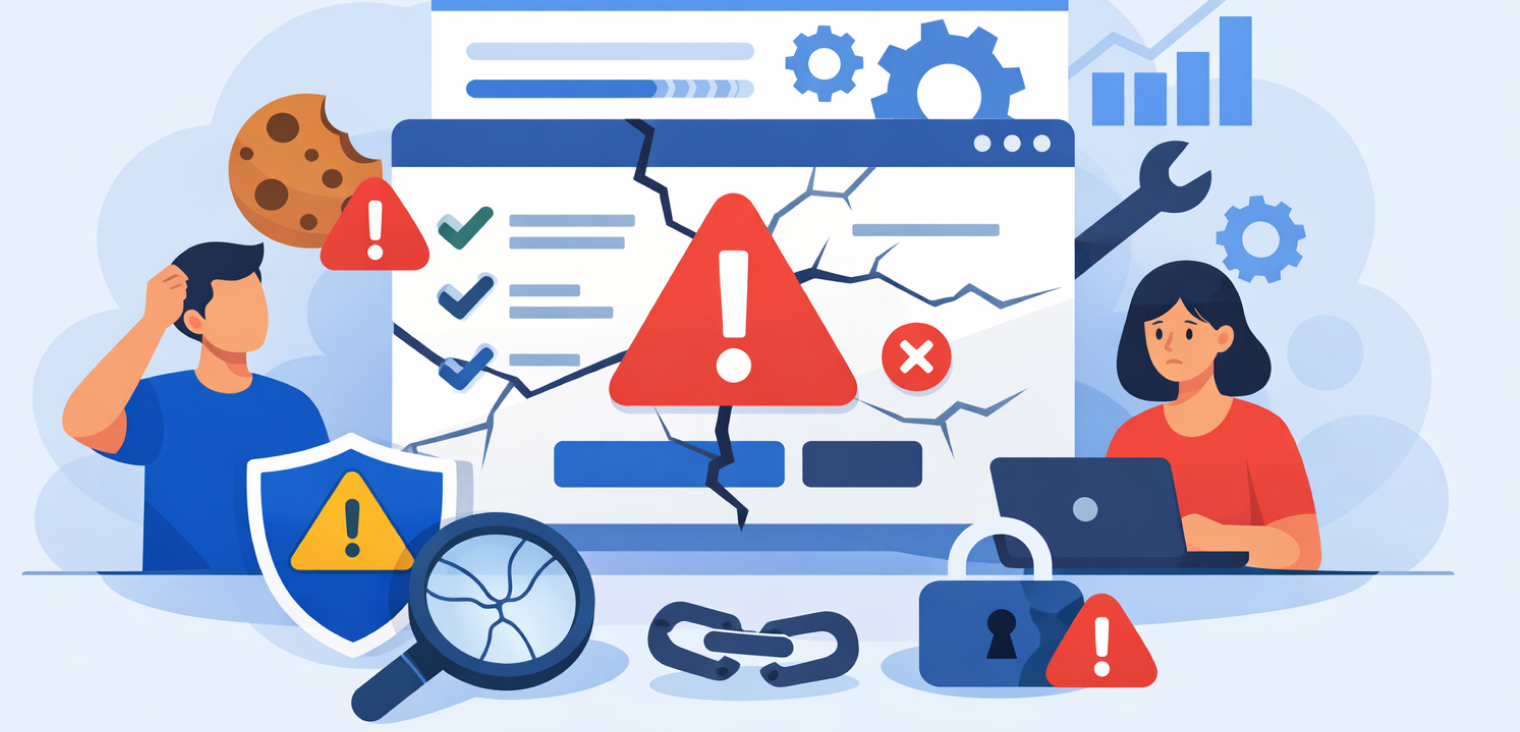
Table of contents
back
to the top
What Happens If Your CMP Breaks After a Website Update?
Website updates often introduce new scripts, plugins, or layouts.
But if your CMP breaks during an update, GDPR compliance breaks with it.
Here's why this matters and how to prevent it.
1. Website Updates Commonly Break CMPs
Common causes:
- New tags added without consent logic
- Tag manager updates
- Theme or plugin changes
- Hardcoded scripts bypassing CMP controls
2. Broken CMP = Invalid Consent
If tracking fires before consent:
- Consent is invalid
- GDPR is violated
- Logs become unreliable
Intent doesn't matter - behavior does.
3. Regulators Expect Ongoing Compliance
Compliance is continuous.
"I didn't know" is not a defense.
4. Regular Testing Is Mandatory
You should:
- Test consent after every update
- Scan for new cookies
- Verify blocking behavior
5. Cookiepal Protects Against Silent Failures
Cookiepal helps by:
- Detecting new cookies
- Blocking unauthorized tracking
- Alerting teams to compliance risks
- Maintaining valid consent logs
Final Takeaway
A broken CMP silently creates GDPR violations. Cookiepal ensures your consent system stays intact, even after website updates.
Sources & References
Explore further
What Happens to Your Ad Campaigns When Consent Mode Is Set Up Wrong
See how an incorrect Google Consent Mode setup can underreport conversions, shrink remarketing audiences, and send campaign optimisation in the wrong direction.
July 30, 2026
8 min
Cookie Consent for Mobile Web vs Desktop: Should the Banner Be Different?
Learn how to design a responsive cookie consent banner for mobile and desktop visitors.
July 23, 2026
8 min

Zero-Party Data vs First-Party Data: What Marketers Need to Know About Consent
Learn the practical difference between zero-party and first-party data, and why both still require clear purposes, transparency, and valid consent.
July 16, 2026
8 min