

What Makes Consent “Freely Given” Under GDPR?
April 8, 2026
•

2 min read
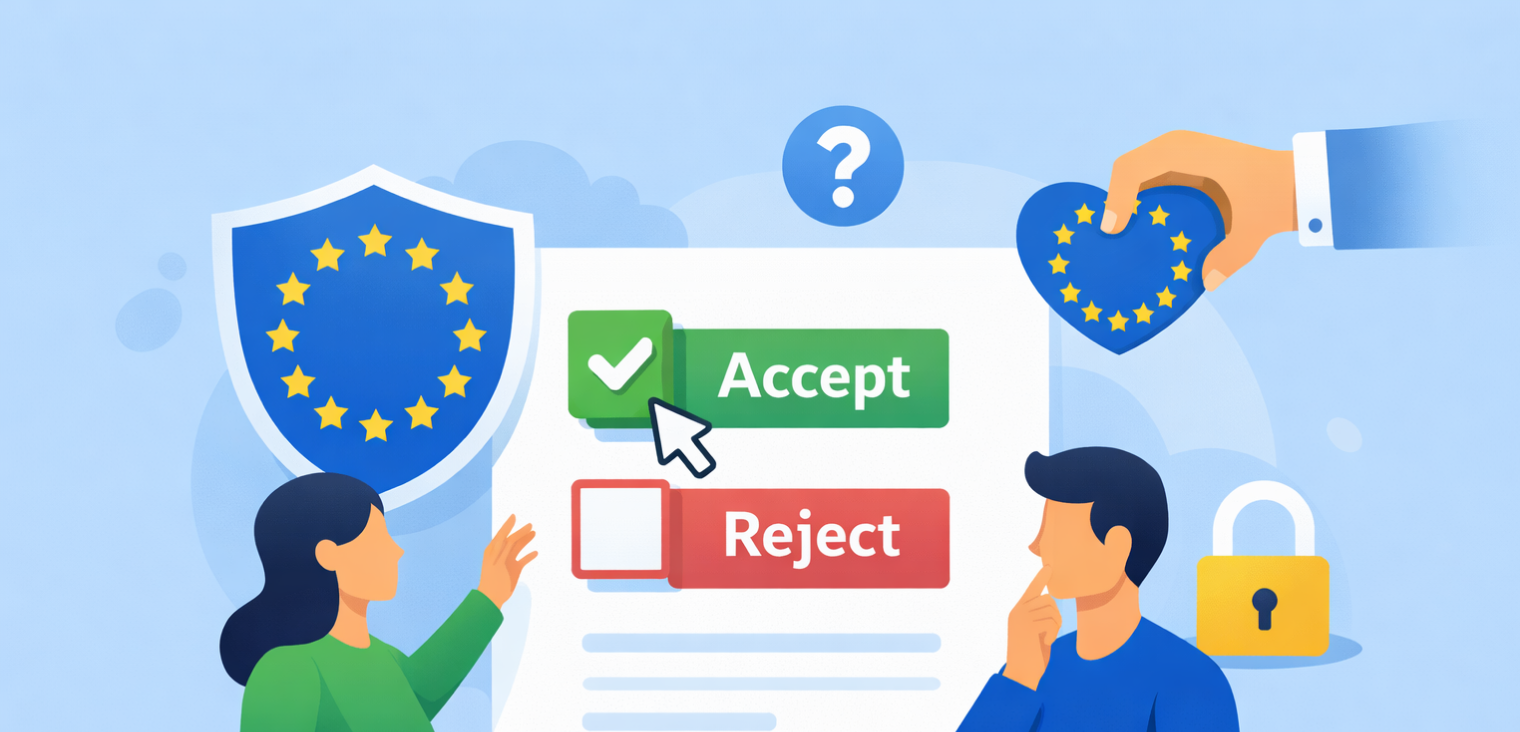
Table of contents
back
to the top
What Makes Consent “Freely Given” Under GDPR?
Introduction
Consent is only valid under GDPR if it is freely given, yet many websites unknowingly invalidate consent through design or pressure.
Here’s what “freely given” actually means, in simple terms.
1. Consent Must Be a Real Choice
Users must be able to say yes or no without consequences.
Consent is not freely given if:
-
Access is blocked unless users accept tracking
-
Services are degraded after rejection
-
Users feel pressured to accept
A real choice means refusal is just as easy as acceptance.
2. No Imbalance of Power
If users feel they have no alternative, consent is invalid.
Examples include:
-
Mandatory consent for unnecessary cookies
-
Forced acceptance for basic site access
-
Bundled consent across multiple purposes
3. Consent Must Be Granular
Users must choose what they consent to.
Valid consent allows users to:
-
Accept analytics but reject marketing
-
Change preferences later
-
Withdraw consent easily
“All-or-nothing” consent is not freely given.
4. Refusal Must Be as Easy as Acceptance
GDPR requires symmetry:
-
One click to accept
-
One click to reject
Anything more complex is considered manipulative.
5. Cookiepal Supports Freely Given Consent
Cookiepal ensures:
-
Equal visibility for accept and reject
-
No forced consent flows
-
Easy preference management
-
Proper consent logging
Final Takeaway
If users feel forced, rushed, or tricked, consent is not freely given. CookiePal helps ensure your consent flows meet GDPR’s strict standards.
Sources & References
Explore further

What Happens to Your Ad Campaigns When Consent Mode Is Set Up Wrong
See how an incorrect Google Consent Mode setup can underreport conversions, shrink remarketing audiences, and send campaign optimisation in the wrong direction.
July 30, 2026
8 min
Cookie Consent for Mobile Web vs Desktop: Should the Banner Be Different?
Learn how to design a responsive cookie consent banner for mobile and desktop visitors.
July 23, 2026
8 min

Zero-Party Data vs First-Party Data: What Marketers Need to Know About Consent
Learn the practical difference between zero-party and first-party data, and why both still require clear purposes, transparency, and valid consent.
July 16, 2026
8 min