

GDPR e armazenamento de dados: qual é o período de retenção correto?
24 de outubro de 2025
•

4 min de leitura
Índice
Voltar
Voltar ao topo
GDPR e armazenamento de dados: qual é o período de retenção correto?
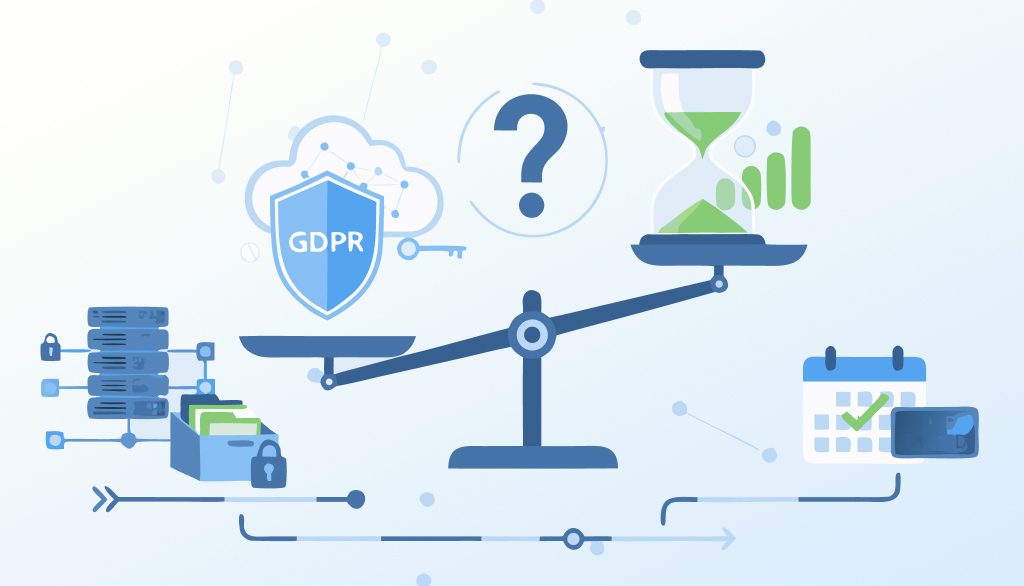
Quando se trata de dados pessoais, mais nem sempre é melhor. De acordo com o Regulamento Geral de Proteção de Dados (GDPR), reter dados pessoais por mais tempo do que o necessário pode colocar sua empresa em risco de não conformidade.
O que é retenção de dados no GDPR?
A retenção de dados refere-se ao período de tempo que uma empresa armazena dados pessoais antes de serem excluídos, anonimizados ou arquivados. GDPR segue uma abordagem baseada em finalidades, o que significa que você só pode manter dados pessoais:
- Pelo tempo que for necessário para cumprir a finalidade para a qual foram recolhidos.
- Não mais do que o necessário, mesmo que esteja armazenado de forma segura.
- Se o motivo pelo qual coletou os dados não for mais válido, deverá eliminá-los ou anonimizá-los.
Existe um limite de retenção de dados GDPR?
O GDPR exige que:
"Os dados pessoais serão conservados de uma forma que permita a identificação dos titulares dos dados apenas durante o período necessário." — Artigo 5.º, n.º 1, alínea e), GDPR
Como definir períodos de retenção compatíveis com o GDPR
As organizações devem criar uma Política de Retenção de Dados que descreva:
- Por que os dados são coletados
- Quanto tempo é mantido
- Quando e como ele é revisado ou excluído
- Processos para exclusão ou anonimização
- Quem é responsável pela execução
Seu Registro de Atividades de Processamento (ROPA) deve refletir os prazos de retenção.
Riscos de manter os dados por muito tempo
- Risco de segurança: Mais dados significam maior impacto de violação.
- Risco regulatório: Não cumprimento dos princípios GDPR.
- Multas: Até 20 milhões de euros ou 4% do volume de negócios global.
Retenção e consentimento dos usuários
Se depender do consentimento dos usuários:
- Defina um período de validade claro (por exemplo, 12–24 meses).
- Renove o consentimento para continuar o processamento depois disso.
- Exclua ou anonimize os dados se o consentimento for retirado ou expirar.
CMPs (Plataformas de gerenciamento de consentimento) ajudam a impor o rastreamento de consentimento com prazo determinado.
Conclusão final
Para manter a conformidade com o GDPR:
- Mantenha os dados apenas pelo tempo necessário.
- Documente sua justificativa para períodos de retenção.
- Audite regularmente e elimine registros desatualizados.
Uma política clara de retenção de dados é essencial para conformidade com a privacidade, confiança e redução de riscos.
Fontes
Explorar mais
O reCAPTCHA exige consentimento de cookies?
O reCAPTCHA pode ser isento como segurança necessária, mas nem toda configuração é. Veja como avaliar a sua versão, auditar os cookies e manter os formulários funcionando.
15 de outubro de 2026
7 min

Widgets de chat ao vivo exigem consentimento de cookies?
Widgets como Intercom e Zendesk muitas vezes rastreiam visitantes antes de qualquer conversa. Veja quais cookies de chat precisam de consentimento, quais podem ser isentos e como testar.
15 de outubro de 2026
7 min

Customer events da Shopify, pixels e consentimento de cookies
Os pixels da Shopify ainda enviam dados de clientes e precisam de consentimento. Veja como app pixels, pixels personalizados e a Customer Privacy API devem funcionar com a sua CMP.
8 de outubro de 2026
7 min